Cavoodle care · Growing confidence
Cavoodles: 9–18 months
From 9 months up to 18 months. Choose another chapter below whenever you need it.
What to expect
Your Cavoodle may look almost grown while their confidence and attention are still developing. Familiar cues can become less reliable in distracting places. Return to easy, rewarded successes and practise calm departures in manageable steps. Persistent distress when left alone deserves help, rather than being treated as stubbornness.
Everyday care for your Cavoodle
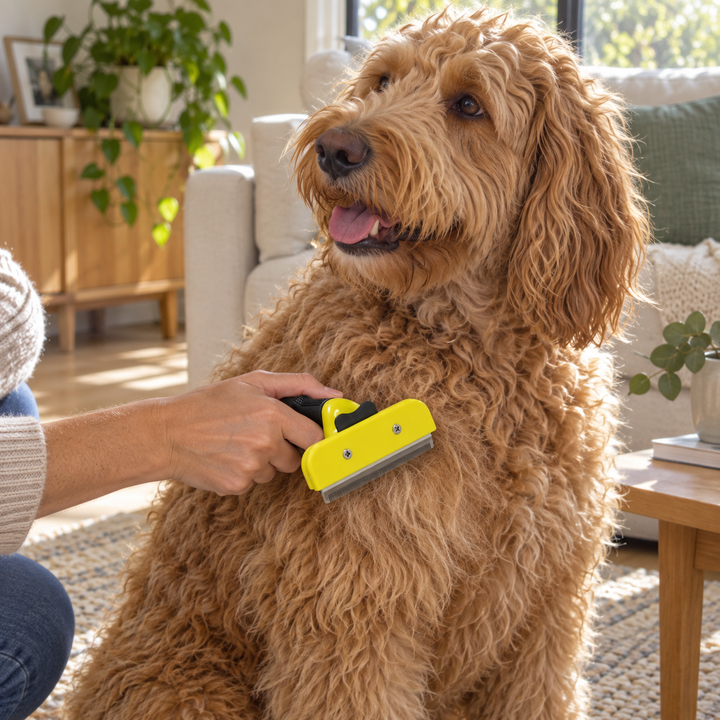
Build a repeatable pattern around a sniffing walk, a short training game and undisturbed rest. Practise checking paws, ears and the mouth with rewards. Ask your groomer to demonstrate a gentle routine for your Cavoodle’s actual coat; do not pull through tight knots.
Food, exercise & rest
Ask your vet whether growth food still suits their size and development before switching to adult meals. Measure portions and include training treats in the daily allowance. Offer self-paced activity; an enthusiastic young dog does not need forced running or repeated jumping.
What to watch for
A recurring skipping step warrants a knee check. Squinting or a red, painful eye needs prompt veterinary attention. Report unexplained neck pain or repeated unusual scratching movements; these signs have several possible causes, and Cavalier ancestry is relevant history for your vet.
Questions for your vet
Bring their puppy vaccination record, recent weight and parent health information. Ask about the next vaccine due date, mouth development, kneecaps, heart examination and desexing timing for this individual.
Use the Australian health calendar to plan prevention. Vaccine timing depends on the product, history and local risk. For tick-risk areas, ask about effective prevention and daily tick checks.
A small thing to try together
Pick one quiet place to practise coming when called. Record what helped your Cavoodle succeed, then make the next session only a little harder.
These chapters organise care; they are not fixed biological milestones. Parent-breed risks are discussion points, not a diagnosis or a prediction that your Cavoodle will develop a condition. New concerning signs can occur at any age.
Keep exploring
Reading for another Oodle? Groodles · 9–18 monthsMoodles · 9–18 months